

Runs table filters and Workspace filters use the same underlying runset configuration. Filtering in the Runs table changes which runs are included in the Workspace. Visibility settings, such as the eye toggle, only control whether included runs appear in panels. Some panels might display only a subset of visible runs because of panel-specific limits.
is, in, >=, within last) depends on this type. After you choose a field, the UI shows only operators that are valid for that field’s type.
Common operators by type
The following table shows the operators most commonly used with each field type, along with an example of how each type appears in a filter expression.The previous table shows only a subset of available fields and operators. The expression editor shows all available fields and operators.
Create a filter expression
The following steps outline how to create a filter:- Click the Runs tab from the project sidebar.
- Click the Filter button, which looks like a funnel, above the runs table.
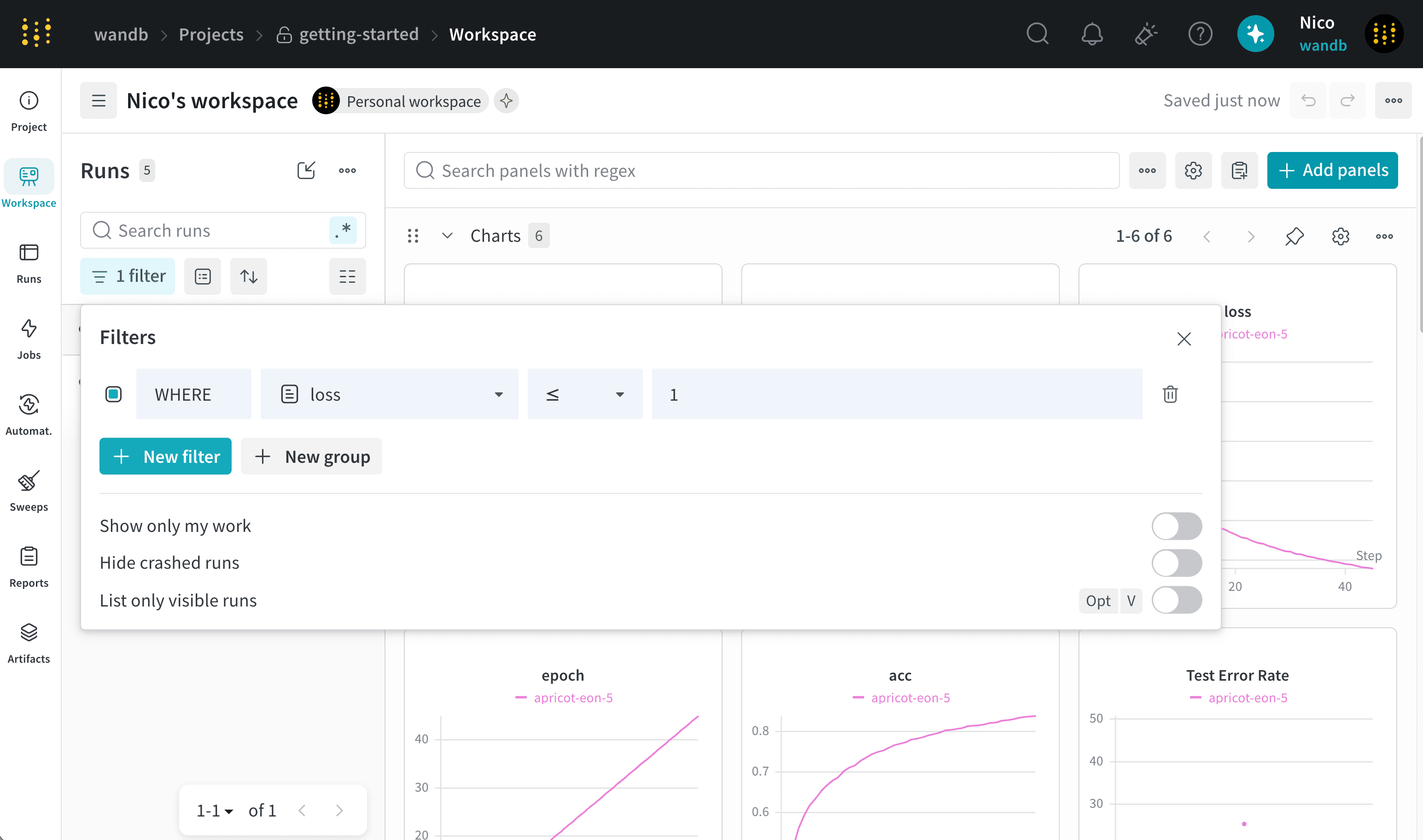
- To create a filter expression, from left to right, select a column name, a logical operator, and a filter value. W&B applies the filter as soon as you select a filter value.
- Optional: Select New Filter to apply additional AND or OR conditions.
- Optional: Select New group to group filters together with parentheses. Grouping lets you create complex filter expressions such as A AND (B OR C).
- To close the filter expression editor, click the x icon in the top right corner.
1:
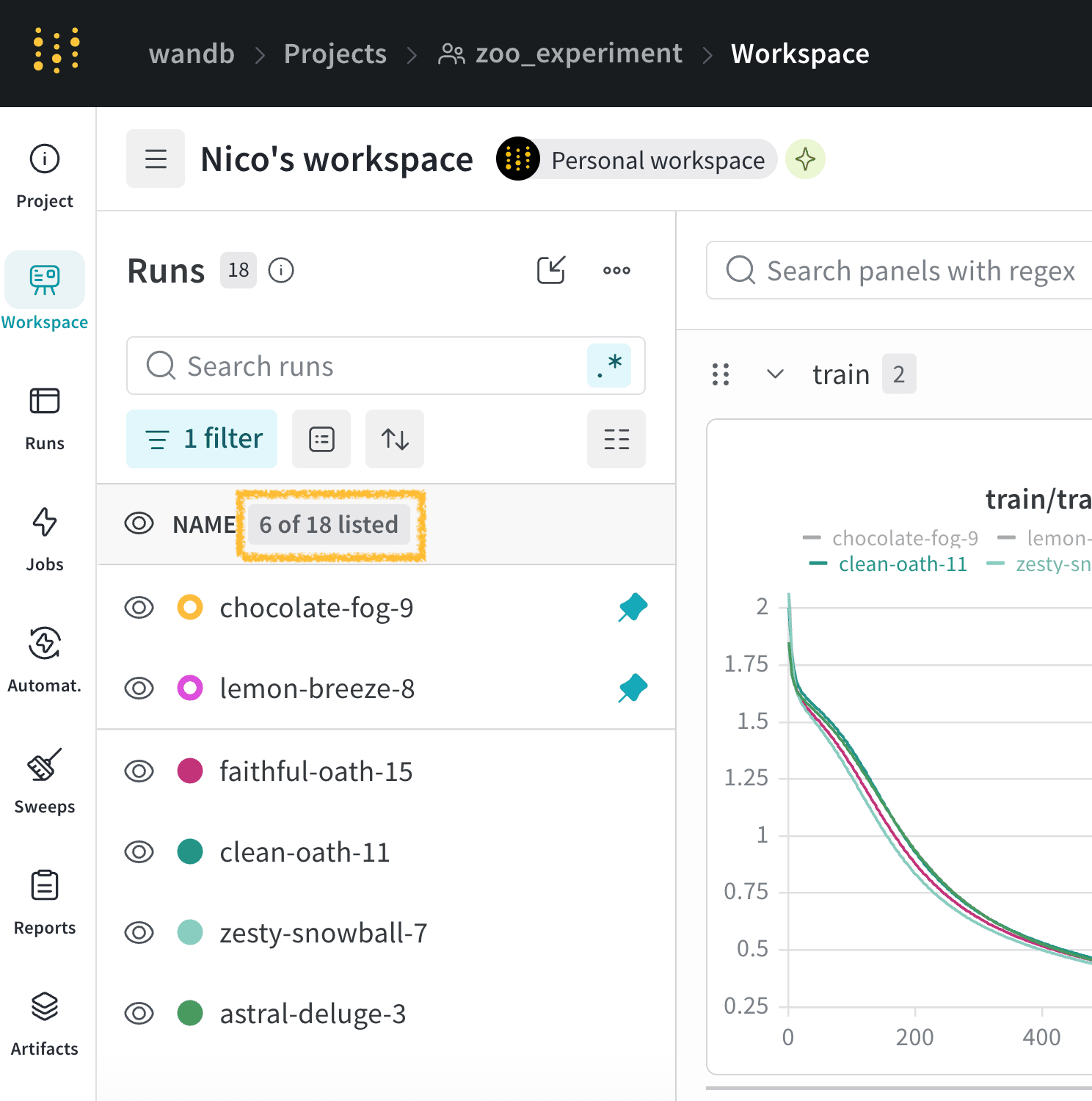
6 of 18 listed which means 6 of the 18 listed runs match the filter expression and are currently displayed. The count is highlighted in the yellow box.
Example: Filter runs with tags
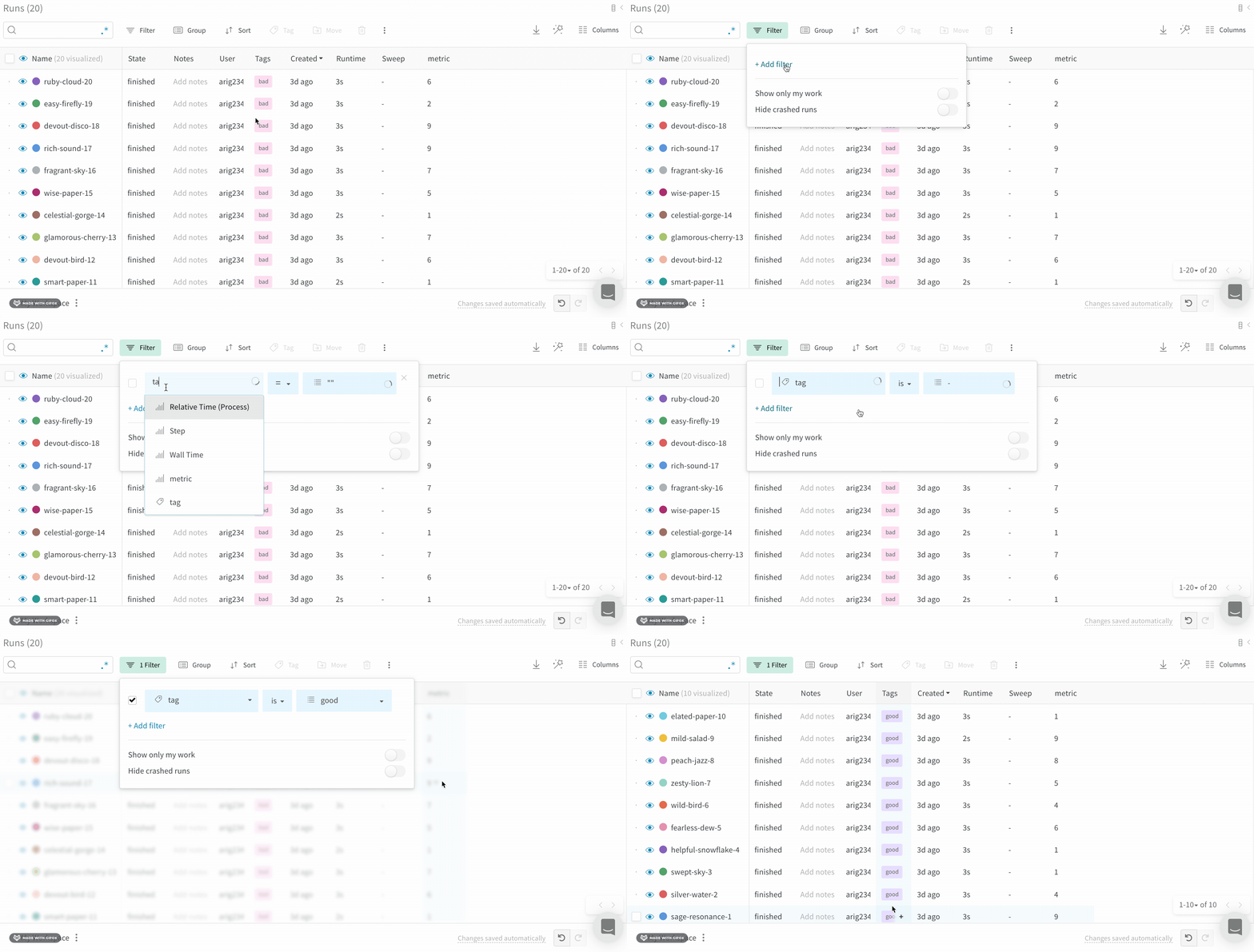
Use tag-based filters to scope a specific group of runs, such as runs sharing a baseline or experiment label. Filter runs based on their tags:- Click the Runs tab from the project sidebar.
- Click the Filter button, which looks like a funnel, above the runs table.
- From left to right, select Tags from the dropdown menu, then select a logic operator.
- Select
is,is not,in, ornot infrom the second dropdown menu. - Enter the tag name you want to filter by from the third dropdown menu.
Example: Filter runs with a timestamp
You can filter by using the MongoDB Query Language. The following example filters runs created between two timestamps using the W&B Public API:Example: Combine filters with AND and OR conditions
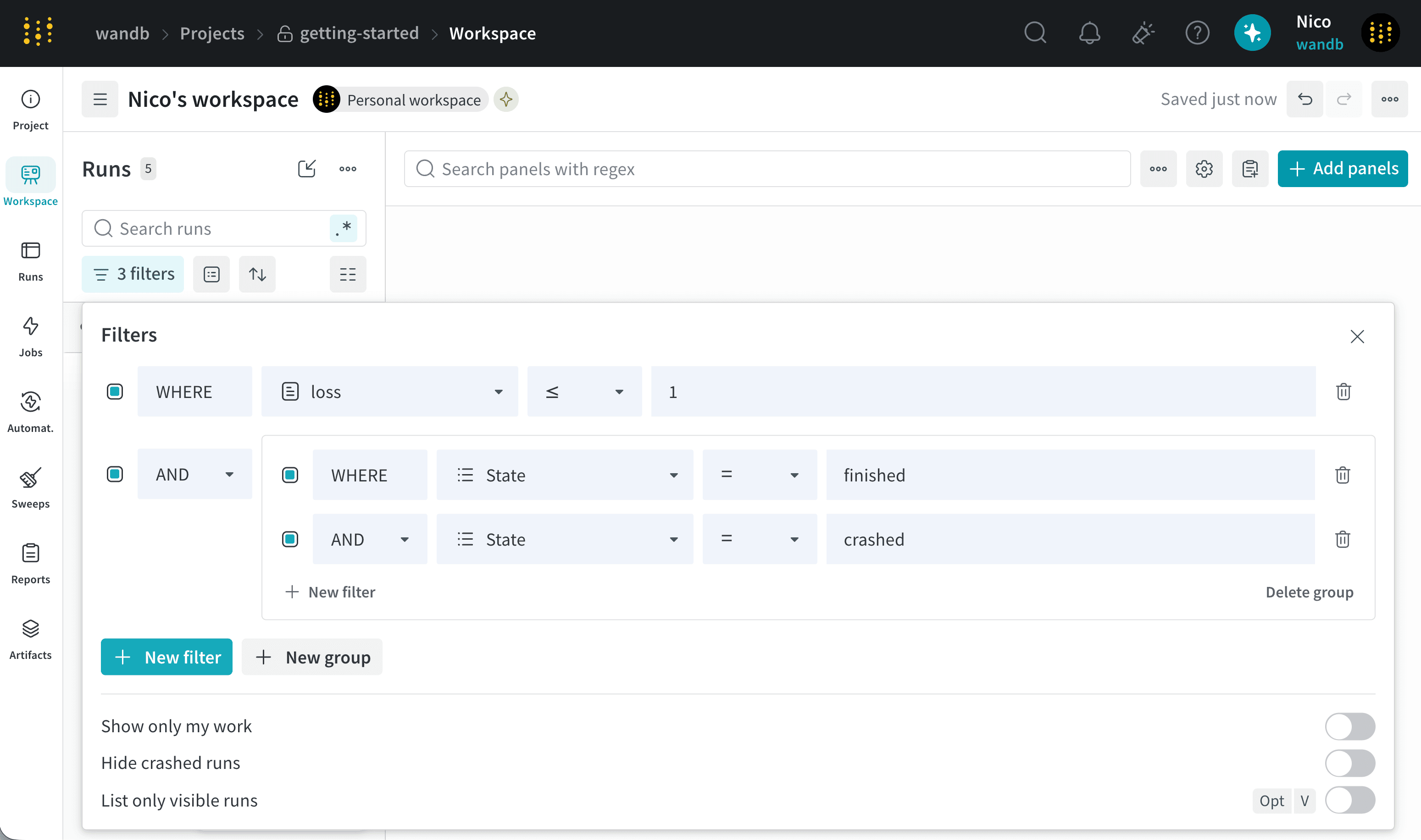
This section describes how to create a complex filter expression likeA AND (B OR C). In this example, A is loss <= 1, B is State = finished, and C is State = crashed.
- Click the Runs tab from the project sidebar.
- Click the Filter button, which looks like a funnel, above the runs table.
- From left to right, select
lossfrom the first dropdown menu, select<=from the second dropdown menu, and enter1in the third dropdown menu. This creates filter A. - Click New Filter and select New group to create a new group for filters B and C.
- For filter B, select
Statefrom the first dropdown menu, select=from the second dropdown menu, and selectfinishedfrom the third dropdown menu. - Click New Filter to create filter C, and select
Statefrom the first dropdown menu, select=from the second dropdown menu, and selectcrashedfrom the third dropdown menu.
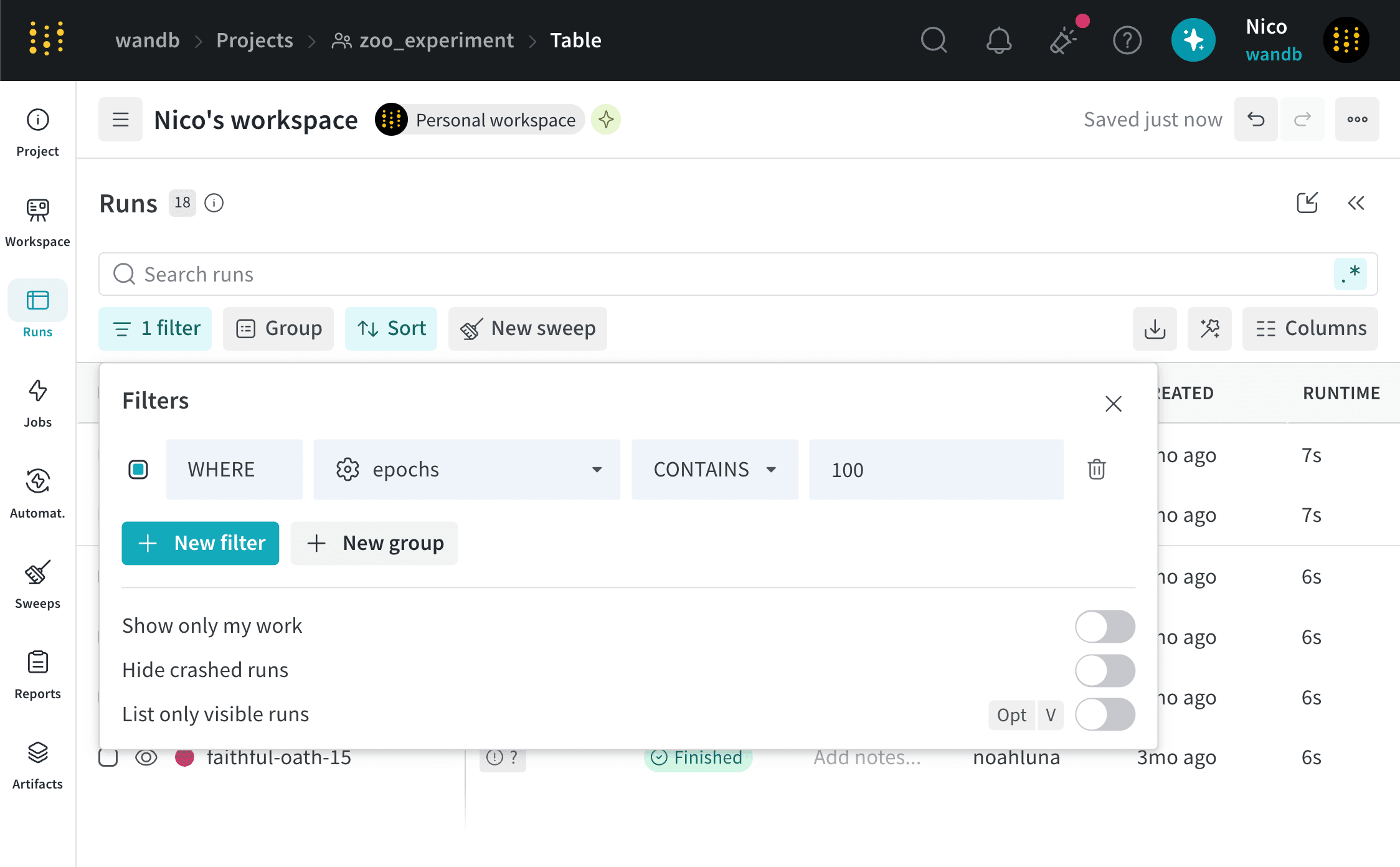
Example: Filter run configuration values with CONTAINS
Filter runs based on whether a run configuration field contains a specific value:
- From the project sidebar, select Runs.
- Select Filter () above the runs table.
- Select a run configuration field from the first menu.
- Select CONTAINS from the second menu.
- Enter the value to filter by in the third field.
epochs configuration field contains the value 100.
Default filters
Besides filters you create, W&B includes a few built-in filters that you can toggle on or off to narrow which runs are visible without writing an expression. By default, W&B provides the following filters:- Show only my work: Shows only runs created by the current user.
- Hide crashed runs: Hides runs with the
crashedstate.
Remove a filter
To remove a filter from the Runs table:- Click the Filter button, which looks like a funnel, above the runs table.
- Select the x icon next to the filter you want to remove.